
Analysts attribute this fall to the recent moderation in energy (mainly crude oil) and commodity prices, lowering of input costs for companies in sectors such as FMCG, consumer durables, and automobiles, reports Krishna Kant.
'When I came here in 2002, I said you can grow at 8%.' 'And I was told that was crazy, and (now) here we are.'

Twenty-three of the 31 stocks in his publicly disclosed portfolio consist small-cap stocks. jhunjhunwala's portfolio rose 15.2% in Q3.

'NRI interest has gone up in the past three-four years.'

'If she contests it, then these people will have to fight it in court.'

'Rather than abolishing stamp duty as STT is already levied on all transactions, the government has de-facto imposed a state STT in the guise of stamp duty'

'People always short-change the resilience of the economy.'

As many as 104 listed companies have fewer independent directors than mandated by the regulations, according to the figures from Prime Database, reports Sachin P Mampatta.

Financial planners advise against putting capital to work by anticipating what might go up or down.
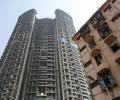
Listed realty developers saddled with unsold properties worth Rs 1 trillion

India's cash-rich promoters are not the same as the wealthiest. For example, Mukesh Ambani is the richest Indian based on his stake in Reliance Industries, followed by Premji, the Adani family of the Adani group, and Radhakishan Damani of Avenue Supermarts.

Mukesh Ambani remains the country's wealthiest promoter as his stake in Reliance is now worth Rs 3.25 trillion!

Average salary has grown faster than average business income for three of the last five years. This has implications in a country like India. Most people in India are self-employed, with 51.4% of the population falling in that bracket.

The government's move to sell enemy shares comes when it is struggling to meet its target of raising Rs 800 billion from the sale of State assets in the fiscal year ending in March 2019. The Custodian of Enemy Property of India holds around Rs 3,000 crore worth of equity shares besides land and property across India.

41 listed firms made 73 donations to gaushalas (cow shelters) and other cow-related charities over the last four years. The donations range from a few thousand rupees to a million.

His portfolio was worth Rs 12,333 crore at the end of June 2018. It was worth Rs 10,633 crore at the end of the September quarter. Smallcaps account for the largest number of his stock-picks. Such a fall has now happened for the third quarter in a row.

Audit firms such as KPMG believe zero complaints may be an indicator of the lack of requisite mechanism to allow for such reporting

'There is a huge tax differential of 15% to 20% depending on income classification.'

The top three companies in terms of the largest value of physical shares showed over 30 per cent shares are held in physical form. Two of the top three were part of the S&P BSE Sensex and the Nifty50 indices.

ONGC, Hindustan Petroleum, Bharat Petroleum, Indian Oil and Oil India listed the spending as part of their mandatory CSR commitment, but CAG noted that the Sardar Patel statue did not qualify for CSR funding.
 © 2026 Rediff.com - Advertise with us - Disclaimer - Privacy Policy - Sitemap - Feedback - About us - Terms of use - Grievances